
You want a cheap flight ticket. So you open the airline's website, book the first fare that looks decent, and move on. That used to be the whole game.
It isn't anymore.
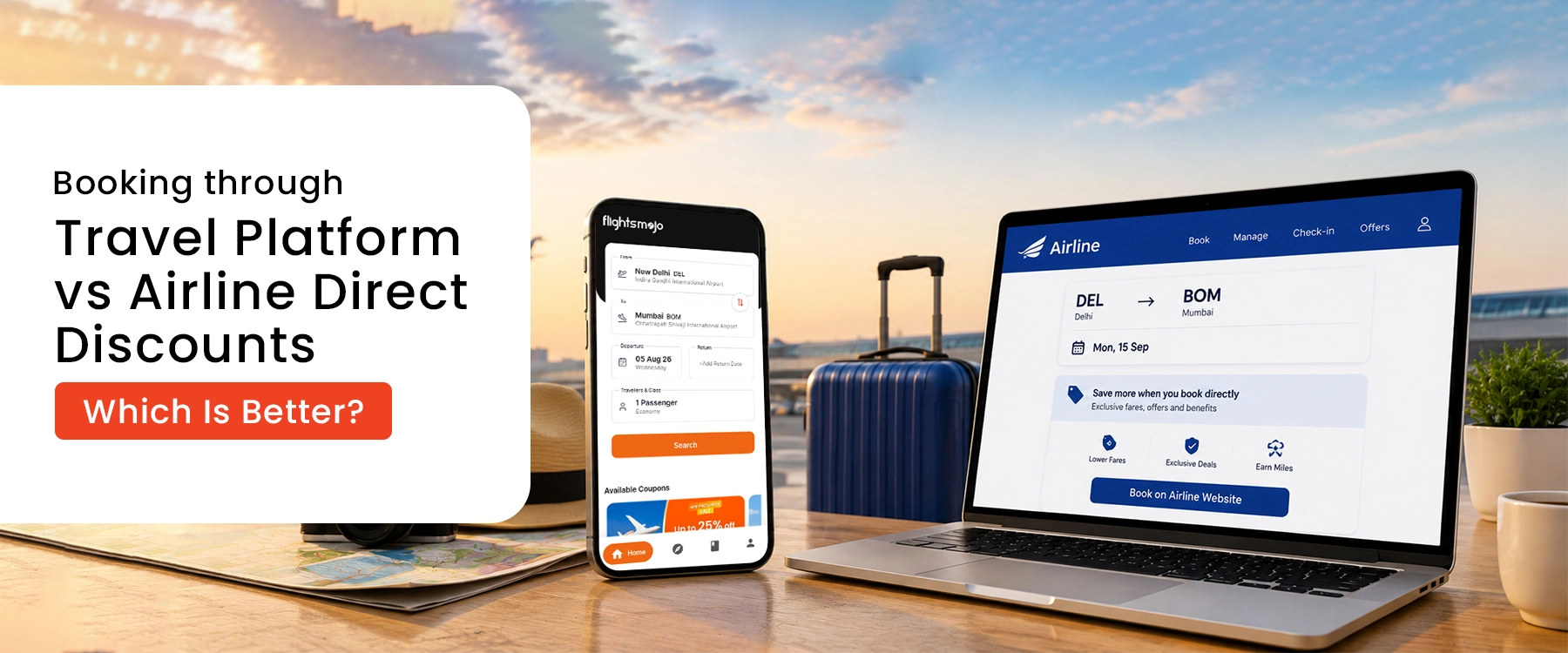
Most travellers now have a choice: book straight from the airline, or use a travel platform that pulls in fares from dozens of carriers, layers on bank offers and promo codes, and lets you compare everything before you pay. A lot of people still assume the airline's own site is automatically the cheapest , since the ticket comes "direct from the source." That's sometimes true.
But once you start comparing side by side, it becomes clear that a good travel platform usually gets you more for your money, and not just on price.
Airline websites aren't doing anything wrong. They're just built to sell you their own seats , not to tell you when someone else has a better one.
A travel platform is a site or app that searches multiple airlines at once and shows you the results together , instead of you opening five different airline websites and doing the comparison yourself.
Because platforms also partner with banks and payment providers, they can layer discounts on top of the airfare itself: promo codes, seasonal sales, cashback, EMI options. None of that shows up when you book directly with a single airline, simply because a single airline has no reason to tell you about a rival's cheaper offer.
Quick note: the cheapest fare on the list isn't automatically the best one. A ticket that costs a little more but includes checked baggage or a shorter layover is often the smarter buy , which is exactly the kind of comparison a single airline site can't offer you.
These are promotional fares an airline runs on its own website or app , festive sales, anniversary offers, new-route launches, or loyalty-member-only pricing. To be fair, they're genuinely useful in the right situation.
The catch is scope, not quality: they only apply to that one airline. If a competitor has a better fare or a more convenient departure time, the airline's own site won't tell you. You'd have to go find out yourself, one website at a time.
Did you know? Airlines often release their best member-only fares a few days before opening them to the general public. If you're loyal to a specific airline and chasing a direct discount, it usually pays to check a day or two early rather than on sale day itself.
Direct booking earns its keep for frequent flyers chasing miles, loyalty tier status, or a specific member-only fare. That's a real advantage, and airlines deserve credit for it. It just applies to a smaller slice of travellers than most people assume , occasional and first-time flyers rarely have enough history with one airline for it to matter.
More airlines to actually choose from. An airline's own website only ever shows its own flights , which makes sense, but leaves you comparing blind. A travel platform puts several carriers on the same route side by side, so instead of hoping you landed on the right airline, you can actually check.
Better odds of finding real savings. Fares shift constantly based on demand, season, and how far ahead you're booking. Seeing several airlines together makes it obvious when one is charging more for the same seat, or when a slightly pricier fare actually includes something worth paying for, like baggage.
Example: say you're flying Delhi to Dubai. The airline's own site quotes ₹24,800, and since that seems reasonable, it's tempting to just book it. Search the same route on a platform, though, and the picture changes , one airline comes in at ₹23,900, another at ₹24,200 with checked baggage included, and a live promo code plus a bank discount shave a bit more off the total.
The airline's fare wasn't a bad deal on its own. It just wasn't the best one on the table, and you'd never have known that without comparing.
Discounts that go beyond the airline's own sale.
Airlines run their own promotions, but they're usually tied to a specific campaign or loyalty tier. Travel platforms tend to stack more offers at once , route-specific promo codes, festival pricing, partner deals , some of which can even be combined with a bank offer for extra savings on top of an already competitive fare.
Payment perks airlines rarely match.
Many platforms work with banks, card networks, and wallets to offer instant discounts, cashback, EMI, or reward points at checkout. Airlines occasionally run similar promotions, just far less consistently, since payment partnerships aren't really their core business.
Real time saved.
Checking six airline websites for one trip adds up fast, and most people give up after the second or third. A platform does that legwork in a single search, so the time you'd spend digging goes into deciding instead.
Pro tip: don't stop your search after the first airline you check, even if the fare looks fine. Most people who overpay for flights aren't bad at finding deals , they just stopped looking one website too early.
Two flights departing within an hour of each other, on the same route, can differ in price by a few thousand rupees purely based on which airline is running a promotion that week. It's rarely about the time of day, it's about which airline wants to fill that particular flight, and you'll only spot the gap if you're looking at more than one airline at a time.
None of this makes airline websites obsolete. Direct booking is genuinely the right call if you fly one airline often and want to build loyalty status, redeem miles, or grab a member-exclusive fare that simply isn't sold anywhere else, that's a real, earned advantage that a comparison platform can't replicate.
For everyone else, which, realistically, is most travellers on most trips, starting with a wider comparison tends to pay off more often than starting with one airline's homepage.
Flightsmojo brings fares from 150+ airline partners into one search, so you're comparing real options instead of guessing whether another carrier is cheaper.
What that gets you:
None of this replaces good judgment , it just gives you better information to make the call with, and a better shot at not overpaying for it.
Quick note: flexibility with dates matters more on popular routes and during peak season. On quieter routes, prices tend to be more stable day to day, so the payoff from shifting your travel date is smaller.
Airlines aren't the villain here, they're just one option, and a narrow one. If you're loyal to a single airline and chasing miles, booking direct still earns its place. But for most trips, a travel platform simply gives you more: more airlines to compare, more ways to save, and a lot less time wasted jumping between websites to find out what you were missing.
A few extra minutes of comparing before you book is a small price for a better flight at a better rate.
1. Is booking through a travel platform cheaper than booking directly with an airline?
It depends on the route and dates, but platforms usually offer better overall value , you can compare multiple airlines and stack promo codes or bank offers that aren't available on an airline's own site.
2. Why compare flights before booking instead of just picking one?
Because the first fare you see is rarely the best combination of price, travel time, and baggage allowance. Comparing options , even quickly , tends to surface a better deal.
3. Will I still earn airline loyalty points if I book through a platform?
Often, yes , it depends on the airline and fare type. Some airlines award points regardless of where you booked; others restrict it to certain fare classes.
4. Is booking through Flightsmojo secure?
Yes. Bookings go through secure payment processing with instant confirmation, and support is available 24×7 if you need help before or after booking.
5. When should I book directly with the airline instead?
When you're redeeming miles, chasing loyalty status, or taking advantage of a member-only fare that's only sold through the airline's official website.
6. Does the lowest fare always mean the best deal?
No. A slightly pricier ticket with included baggage, a shorter layover, or better cancellation terms can be the smarter buy once you look at the whole booking.
7. Can I combine a promo code with a bank offer?
Often, yes , subject to each offer's terms and conditions.
8. Why do flight prices change so often?
Seat availability, demand, booking timing, and airline pricing strategy all shift fares in real time. Checking regularly and booking when prices dip helps you catch a better rate.