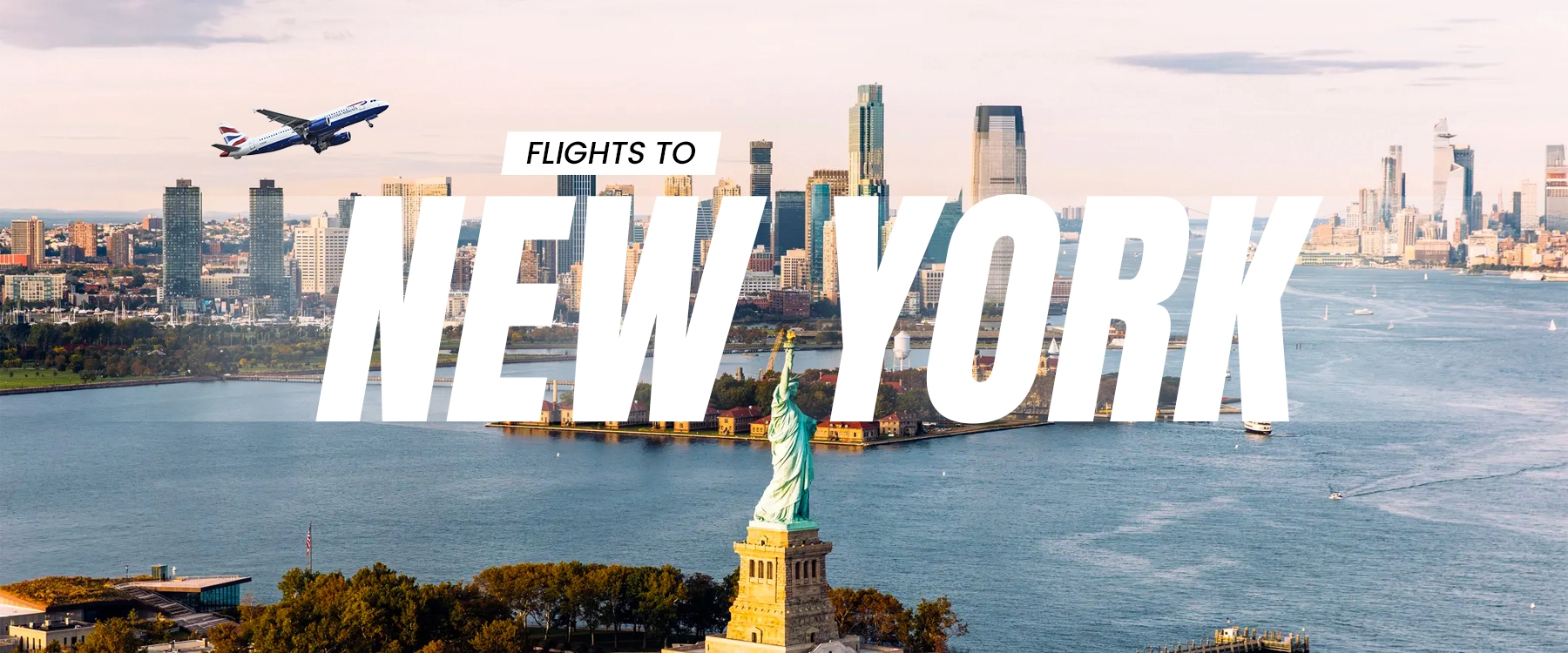

New York is on your travel list, there is a good chance your journey starts at John F. Kennedy International Airport. Known to most people simply as JFK, it is the busiest international airport in North America and one of the busiest in the United States. Every day, millions of travellers pass through its terminals to reach the city or connect onward to destinations across the world.
A genuinely wide range of options. Nearly 100 airlines operate out of JFK, connecting New York with six continents through both direct and connecting routes. Whether you are flying for work, a family holiday, higher education or a business trip, there is rarely a shortage of choice throughout the year.
The airport sits in Queens, about 16 miles from Midtown Manhattan and is spread across more than 5,200 acres. It has five passenger terminals and four runways, with transport links that carry travellers into hotels, business districts and the city's main attractions. That combination of scale and global reach is exactly why so many international visitors choose JFK as their gateway into New York.
Before you confirm your flight booking, it helps to know a little more about the airport its history, the airlines that fly here, what to expect inside the terminals and how to get into the city once you land. If you are also hunting for cheap flight tickets, comparing fares properly before you book is what actually saves you money.
JFK is a major hub for American Airlines and Delta Air Lines and it serves as the main operating base for JetBlue. Alongside these three, a long list of international carriers run daily flights in and out of the airport, covering everything from short domestic hops to some of the longest non-stop routes in commercial aviation.
The five passenger terminals are numbered 1, 4, 5, 7 and 8 and each one is used by a different mix of airlines. Getting between them is easy thanks to the AirTrain which loops around the entire airport. Beyond that, you can reach JFK by train, bus, taxi, shuttle or private car, depending on where in New York you are coming from.
Passenger travel is only half the story here. JFK also handles a massive volume of international cargo, making it one of the busiest freight airports in North America. That mix of passenger and cargo traffic is why the airport stays active around the clock.
The airport's story begins in 1948. It first opened as New York International Airport, though most people called it Idlewild, a name taken from the old golf course the airport was built on. It was developed to take pressure off LaGuardia which was already struggling to keep up with the growing number of flights into the city.
Construction ran through the 1940s and the airport welcomed its first flight on 1 July 1948. As air travel grew, so did the airport, new runways, taxiways and terminals were added and airlines from around the world gradually shifted their international services here, helping it expand faster than anyone had planned for.
In December 1963, following the assassination of President John F. Kennedy, the airport was renamed in his honour. The decades since have brought modern terminals, better transport links and steadily improving passenger facilities. Today, JFK connects New York with hundreds of destinations worldwide and that global network is exactly what makes it such a popular choice for travellers booking a flight to the city.
With close to 100 airlines operating here, JFK gives travellers a genuinely wide spread of routes , both within the United States and across the world , without ever needing to change airports.
Some of the major airlines flying from JFK include:
Popular international routes out of JFK include:
Doha, Seoul, Milan and Munich, among hundreds of other cities
On the domestic side, JFK also connects easily to Los Angeles, San Francisco, Miami, Chicago and most major US cities.
With this many options, the right flight booking usually comes down to your travel dates, preferred airline, baggage needs and budget which is exactly where comparing fares properly pays off.
Each of JFK's five terminals comes with check-in counters, security checkpoints, boarding gates, shopping areas, restaurants and airline lounges. Around 130 gates handle both domestic and international flights, so it is worth checking your terminal before you leave for the airport , it can save a fair bit of walking once you are there.
Beyond the terminals themselves, here is what else the airport offers:
JFK has also been steadily modernising. Several terminals have already been rebuilt and further expansion projects are underway to keep up with growing travel demand.
JFK has a history that stretches well beyond its size and flight schedule. In 2007, it became the first airport in the United States to welcome a passenger Airbus A380. A few years later, it was also the first US airport to receive a commercial Airbus A350, both moments that showed how quickly the airport adapted to bigger, more advanced aircraft.
JFK is also home to one of the longest non-stop passenger flights in the world. Singapore Airlines operates a direct service between Singapore and New York on an Airbus A350-900ULR, covering thousands of kilometres without a single stop.
Then there is the TWA Flight Center, a building designed by architect Eero Saarinen that remains one of the airport's most recognisable landmarks. It no longer functions as a passenger terminal, but it has been carefully restored and now operates as the TWA Hotel, giving visitors a real piece of aviation history to walk through.
A little planning goes a long way at an airport this size. Arriving with enough time before your flight gives you a comfortable buffer for check-in, security and boarding without feeling rushed.
Know your terminal number before you set off, different airlines use different buildings and knowing this in advance saves time the moment you walk in. Once you land, the AirTrain connects you to the subway and Long Island Rail Road for onward travel into the city while taxis, buses, shuttles and private vehicles remain available around the clock.
Before locking in your flight booking, take a moment to compare schedules, baggage allowances, layover options and ticket prices across airlines. A small shift in your travel date is often enough to unlock genuinely cheap flight tickets, especially if you book early instead of settling for the first fare you see.
Comparing airlines individually takes time. FlightsMojo brings routes, schedules and fares for JFK into one place, so you can pick what actually fits your travel plans and your budget without hopping between websites.
The platform also offers a few things worth knowing about:
Whether you are booking a first trip to New York or flying there regularly, FlightsMojo keeps the process simple from search to confirmation.
For millions of travellers, yes. From its early days as Idlewild to becoming one of the busiest international airports on earth, JFK has grown right alongside global air travel and it now connects New York to hundreds of destinations through nearly 100 airlines.
Whether you are flying for work, study, family or a holiday, choosing the right flight to JFK matters. Compare airlines, routes and cheap flight tickets through FlightsMojo before you book and you will find a flight that genuinely fits your plans and your budget.
1. Where is John F. Kennedy International Airport located?
John F. Kennedy International Airport is located in Queens, New York City, around 16 miles from Midtown Manhattan. You can reach the airport by train, AirTrain, bus, taxi, shuttle or private car.
2. Why is JFK Airport famous?
JFK Airport is one of the busiest international airports in the world. It connects New York with destinations across six continents and serves millions of travellers every year.
3. Why was Idlewild Airport renamed John F. Kennedy International Airport?
The airport was originally known as Idlewild Airport. In December 1963, it was renamed John F. Kennedy International Airport to honour President John F. Kennedy after his assassination.
4. How many terminals does John F. Kennedy International Airport have?
JFK Airport has five active passenger terminals: Terminal 1, Terminal 4, Terminal 5, Terminal 7 and Terminal 8. Each terminal serves different airlines and international routes.
5. Which airlines operate from John F. Kennedy International Airport?
Many domestic and international airlines operate from JFK Airport, including American Airlines, Delta Air Lines, JetBlue, Emirates, Lufthansa, Singapore Airlines, Qatar Airways, British Airways, Air France and many others.
6. How can I travel from JFK Airport to New York City?
You can travel from JFK Airport to New York City using the AirTrain, New York City Subway, Long Island Rail Road, buses, taxis, ride-sharing services, airport shuttles or private vehicles.
7. What facilities are available at John F. Kennedy International Airport?
The airport offers five passenger terminals, shopping outlets, restaurants, airline lounges, baggage services, parking facilities, cargo terminals, AirTrain connections and passenger assistance services.
8. What is the best time to book a flight to John F. Kennedy International Airport?
Booking your flight several weeks in advance often gives you more airline choices and a better chance of finding cheap flight tickets. Travelling during off-peak periods can also help reduce your travel costs.
9. How can I find cheap flight tickets to John F. Kennedy International Airport?
You can compare airlines, routes and fares through Flightsmojo to find cheap flight tickets to John F. Kennedy International Airport. Comparing different travel dates and booking early may also help you save money.
10. Why should I book my flight to John F. Kennedy International Airport with Flightsmojo?
Flightsmojo lets you compare multiple airlines and flight fares in one place. You can also benefit from TripShield for eligible bookings, Visa2Fly for selected international destinations, direct airline partnerships and 24/7 customer support to make your flight booking easier.