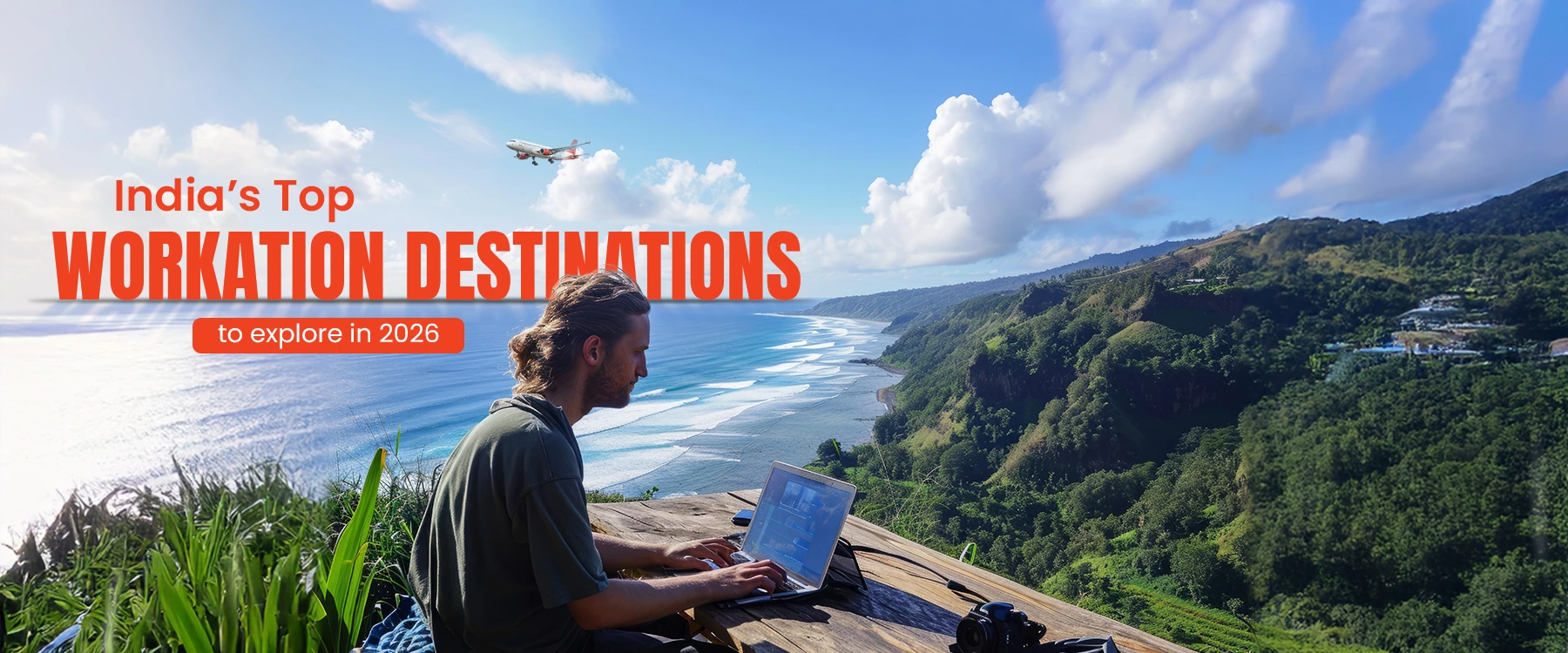

There is a different kind of tiredness that does not come from work itself.
It comes from doing the same work in the same place every single day. The same chair, the same walls, the same routine, everything becomes predictable, and slowly, even simple tasks start feeling heavier than they actually are.
That is exactly where the idea of a workation begins to make sense.
Across India, a growing number of professionals are no longer waiting for long holidays. Instead, they are choosing destinations where they can continue working without breaking their schedule, while changing everything around it. This shift is especially visible among younger travellers, where places far from pollution, big buildings, heavy and fast lifestyle
But here is what most of us realise too late a workation is not just about going somewhere beautiful but here are some places which can be your workation.
Before looking at destinations, it is important to understand what makes a workation successful in real terms, because this is where most people make mistakes.
That’s why we found out some practical workation like Rishikesh, McLeodganj, Coorg, and Hampi stand out because they manage these factors better than most other destinations in India.
There is something about Rishikesh that settles you down without trying too hard.
The town sits along the Ganga, surrounded by hills, and the first thing you notice is the pace. It is not slow in a frustrating way. It is steady, which makes it easier to think, focus, and organise your day.
You land at Jolly Grant Airport, and within 25 to 30 minutes, you are already moving through the town. This short distance makes a bigger difference than most people expect, because it removes the stress of long transfers.
The airport itself is small but efficient. You move through arrivals quickly, taxis are easily available outside, and the route to Rishikesh is straightforward without complicated navigation.
Flights from Delhi take around one hour, which makes even a same-day work-and-travel plan possible. Many people take an early morning flight, reach by noon, and are ready to work by afternoon
Where You Stay and How You Work
Rishikesh has clearly adapted to remote workers, and you can see this in the way stays are designed.
Instead of only focusing on views, many hostels and retreats now include proper workspaces. You will find long tables, individual desks, charging points placed thoughtfully, and quiet zones where people actually respect working hours.
Internet is one of the strongest advantages here. Many properties offer fibre connections, and speeds are usually stable enough for meetings, uploads, and continuous work. Power backup is also common, which becomes important during rainy months.
You do not spend your day searching for a “work-friendly café” you will have it all.
McLeodganj feels soft from the moment you arrive.
The air is cooler, the surroundings feel open, and the town carries a mix of Tibetan culture and mountain life that creates a very distinct atmosphere. As McLeodganj combines Tibetan culture with mountain life.
From monasteries to small cafés and trekking routes like Triund, the town offers a mix of calm and activity.
The Journey and First Experience
After landing at Kangra Airport, the short drive into the hills slowly shifts your pace. Roads curve through mountains, and the noise of cities starts fading away.
The airport itself is compact, which means quicker exits and easier transfers. Taxis are readily available, and most stays are within a manageable distance.
Flights from Delhi take around one and a half hours, and although connections may be needed from other cities, the journey remains smooth overall.
Workspaces, Cafés and Internet Reality
McLeodganj does not offer structured coworking setups like Rishikesh, but it creates something equally valuable, a working environment that feels natural.
Cafés become workspaces. You will see people with laptops in corners, working quietly while the place functions normally around them. Internet is generally reliable in main areas, although it can vary slightly depending on where you sit.
Hostels and stays often provide common working areas, which creates a shared environment where people work, interact, and exchange ideas.
When to Plan and What to Expect
Spring and early winter offer the most comfortable experience. Summers bring more travellers, while winters can get quite cold, especially at night.
Coorg does not try to impress you immediately. It reveals itself slowly.
You land at Kannur International Airport, which is a modern airport with organised facilities, smooth passenger flow, clean terminals, and clear transport access points. Compared to busier metro airports, movement here feels quicker and less chaotic
From the airport, it just take the 2.5-hour drive to Coorg is not just a transfer, it becomes part of the experience. The route passes through dense greenery, small towns, and plantation roads, gradually removing urban noise and preparing you mentally for a quieter environment.
Flights connect Kannur with major cities like Delhi, Mumbai, and Bengaluru. Travel time ranges between 1.5 to 3 hours depending on the route, and fares typically begin around ₹5,000, although prices increase during peak seasons.
Where Work Stays Focused and Breaks Feel Natural
There is no traffic noise, no crowd, and no constant distraction, so your focus stays longer and your work moves faster. You step out into coffee plantations, or visit places like Abbey Falls, or just sit in a quiet café without feeling rushed. These moments slow you down just enough, so when you return to work, your mind feels clear again.
Everything around you flows in a way that keeps your work steady instead of breaking it.
Hampi is not structured, and that is exactly what makes it different.
You reach Hubli Airport, which is a functional regional airport with steady domestic connectivity, especially from Bengaluru. The airport is simple to navigate, with quick exits and easy taxi availability.
From Hubli, the journey to Hampi takes around 2 to 3 hours. This stretch moves through dry landscapes and open terrain, which feels very different from hill or forest routes. It prepares you for the kind of environment Hampi offers a open, raw, and less structured.
Flights from Bengaluru take about 1 to 1.5 hours and can start from ₹3,500, while Delhi routes may range closer to ₹6,000 depending on demand.
What Makes It Worth It
Hampi offers something that structured destinations cannot mental space.
The landscape of ancient ruins, boulder formations, and open skies creates an environment where your mind slows down naturally. This shift allows new ideas to develop, especially for people working in creative or strategic roles.
Even simple tasks feel different when your surroundings are not repetitive.
Hampi’s environment is not about activity, but exploration also.
You can experience:
The experience feels less like a schedule and more like a flow.
Flight planning plays a much bigger role in workations than most people expect.
Unlike short trips, you are not just travelling for leisure. You are shifting your work environment, which means timing, cost, and flexibility all matter equally.
One of the most effective strategies is booking flights 40 to 60 days in advance, because this window often provides the best balance between price and availability. Last-minute bookings can increase costs significantly, especially for smaller airports like DHM or HBX.
Timing also matters.
Choosing early morning or late evening flights helps you avoid losing an entire workday. For example, a morning flight to Dehradun allows you to settle in Rishikesh by afternoon and still complete important tasks the same day.
Using airport codes like DED, DHM, CNN, and HBX helps you search faster and compare routes more accurately. It also allows you to explore alternative connections when direct flights are expensive.
Another important factor is flexibility.
Prices vary depending on weekdays, demand, and seasonal traffic. Mid-week flights are often cheaper than weekend departures, and off-season travel can reduce costs significantly.
All of this becomes easier when you use Flightsmojo, where you can compare routes, check multiple airlines, and choose flights that match your schedule instead of adjusting your work around travel with cheap flights ticket.
A workation is not about escaping work.
It is about creating a setup where work feels easier to manage and less draining to perform.
When your travel is smooth, your stay supports your routine, and your environment reduces distractions instead of adding them, your productivity improves without extra effort.
That is why destinations like Rishikesh, McLeodganj, Coorg, and Hampi are growing. They are not just places to visit. They are places where work and life start fitting together more naturally.
And once that happens, you do not just complete your work you experience it differently.
1. How is a workation different from simply working while travelling?
A workation creates a balanced routine where work fits naturally into the day instead of interrupting travel. You choose a place that supports productivity, so work feels lighter rather than forced between activities.
2. Can a change in environment actually improve work performance?
Yes, a new setting reduces monotony and refreshes your mind. When surroundings change, your focus improves and tasks feel less repetitive, which often leads to better output without extra effort.
3. What kind of jobs are best suited for a workation lifestyle?
Remote-friendly roles such as writing, design, coding, consulting, and digital marketing suit workations well. Any job that depends more on internet access than physical presence can adapt easily.
4. How long should an ideal workation last?
A workation should last at least 5 to 10 days to feel effective. Shorter trips may feel rushed, while slightly longer stays help you settle into a rhythm and experience real benefits.
5. What are common mistakes people make during their first workation?
Many people choose destinations only for views and ignore internet quality or travel fatigue. Others over-plan activities, which reduces work focus and creates unnecessary pressure.
6. Does travelling for a workation increase overall expenses?
It depends on planning. If you book flights early and choose longer stays, costs can remain controlled. Platforms like Flightsmojo help compare fares in advance, which makes budgeting more practical.
7. How do time zones affect workation planning within India?
India follows a single time zone, which removes a major challenge. You can travel across regions without adjusting your work schedule, making internal workations much simpler.
8. Is it better to travel solo or with colleagues for a workation?
Solo travel offers better focus and flexibility. Travelling with colleagues can feel engaging, but it may turn into a social trip, which can affect productivity if not managed well.
9. How can flight timing impact your work routine during a workation?
Flight timing decides whether you lose a full day or not. Early or late flights help you adjust without affecting work hours. Tools like Flightsmojo allow you to choose timings that fit your schedule rather than disrupt it.
10. Can a workation help reduce long-term burnout?
Yes, it can. A workation changes your environment without stopping your workflow. This shift breaks routine fatigue and helps you feel mentally refreshed while staying consistent with your responsibilities.