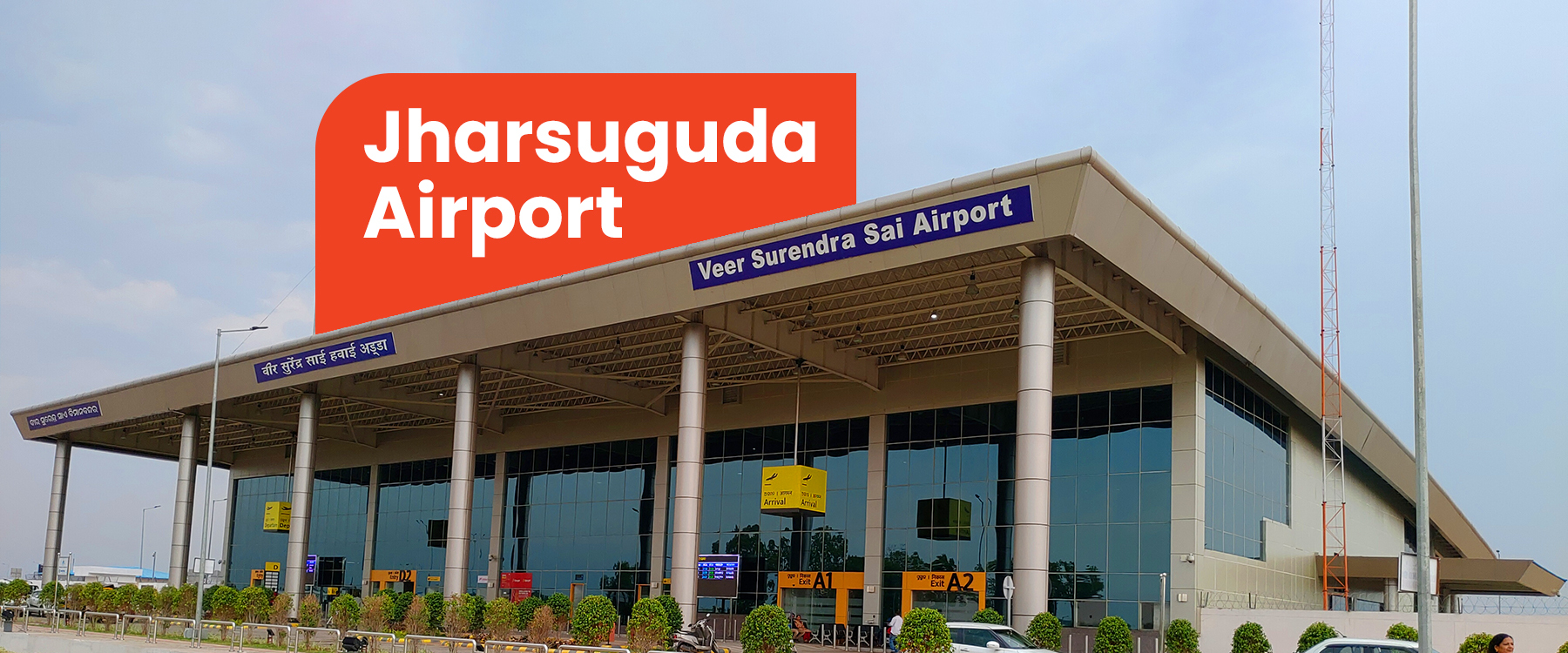

Jharsuguda Airport is officially known as Veer Surendra Sai Airport. It improves air connectivity in western Odisha by linking the region with major Indian cities. The airport supports flights to Jharsuguda Airport for domestic travel and reduces dependence on long road or rail journeys. Its location close to the city centre allows faster access which makes travel easier for both business and leisure passengers.
This convenience reflects a larger transformation. The airport did not always operate at this level and its current role becomes clearer when we look at its development journey.
Veer Surendra Sai Airport is located in Durlaga village near Jharsuguda in Odisha. The airport lies about 5 km from the city centre while Jharsuguda Junction Railway Station is around 8.5 km away. This positioning supports smooth access through both road and rail networks.
The airport uses JRG as its IATA code and VEJH as its ICAO code for aviation operations. It operates as a domestic airport and serves districts such as Jharsuguda, Sambalpur, Sundargarh and Bargarh, along with parts of Chhattisgarh. This wide coverage increases its regional importance and that importance connects directly with its historical background.
Jharsuguda Airport originated during World War II when Allied forces used the site as an airfield for strategic operations. After independence, the airfield remained unused for many years which slowed aviation growth in the region.
The redevelopment process began in 2013 when the Odisha Government approved funding for the project. In 2014, the state government signed an agreement with the Airports Authority of India which allowed construction work to move forward. The airport received a 4C category licence from the Directorate General of Civil Aviation in 2018 which made it suitable for larger aircraft.
The airport was inaugurated on 22 September 2018. Soon after, authorities named it Veer Surendra Sai Airport in honour of the freedom fighter. This journey explains how the airport transformed from an inactive airstrip into a modern aviation facility.
The airport includes a modern passenger terminal that manages movement efficiently. The terminal building covers about 5,500 square metres and handles 150 arriving passengers and 150 departing passengers at a time. Its modular design supports future expansion which allows capacity growth when demand increases.
The runway can handle aircraft such as Airbus A320, Airbus A321 and Boeing 737. This capability ensures stable commercial operations and improves route connectivity. Inside the terminal, design elements reflect Sambalpuri art, traditional dance forms and local craftsmanship. This design gives the airport a strong regional identity.
This infrastructure supports efficient operations. These operations depend on passenger facilities that ensure comfort during travel.
The airport provides essential services that support passengers from arrival to departure.
Check-in and Security: Passengers complete check-in and security procedures through organised counters and screening systems. This structure reduces waiting time and maintains a steady flow inside the terminal.
Waiting Areas: Seating areas provide space for passengers to relax before boarding. Display systems show real-time flight information which helps travellers stay updated.
Passenger Assistance: Airport staff provide guidance and support when needed. This assistance improves the travel experience, especially for first-time flyers.
Transport Services: Taxis and local vehicles operate outside the terminal. These services help passengers reach the city without delay.
These facilities cover basic needs. Strong flight connectivity further improves the airport’s usefulness.
Jharsuguda Airport connects travellers with major Indian cities through regular flight services. Airlines such as IndiGo and Star Air operate from this airport and provide reliable travel options.
IndiGo operates routes to Delhi, Kolkata, Bengaluru and Mumbai. Star Air connects Bhubaneswar and Hyderabad. Direct flights from Delhi take around 1 hour and 48 minutes to 1 hour and 55 minutes. Weekly frequency can reach up to 35 flights depending on demand.
This connectivity improves travel flexibility. Ticket pricing and booking timing play an important role in planning these journeys.
Flight fares for Jharsuguda vary based on demand and booking period. One-way fares can start from around ₹5,859 while return fares are approximately ₹12,392. Prices increase during peak travel months such as July while January usually offers lower fares.
Booking tickets early helps secure better prices and preferred timings. Travellers should reach the airport at least one to two hours before departure to avoid delays. These steps reduce uncertainty and help manage travel more efficiently.
A reliable booking platform simplifies this process further.
Flight Ticket Booking becomes easier when travellers compare options before confirming tickets. Searching for Cheap Flights allows better control over travel costs and helps identify suitable routes.
Flightsmojo allows travellers to Book Flights Online while checking real-time availability across airlines. Travellers can compare fares, timings and routes in one place which helps them choose Cheap Air Tickets based on their schedule and budget. This approach saves time and reduces confusion during planning.
Jharsuguda Airport offers multiple transport options that support easy travel between the airport and the city.
Road Connectivity: The airport connects through NH49. Taxi travel to the city usually takes about 25 minutes.
Rail Connectivity: Jharsuguda Junction lies about 8.5 km from the airport. The station connects the region with major cities across India.
Bus Services: Local and interstate buses provide additional travel options. These services support passengers who prefer budget-friendly transport.
This accessibility ensures smooth movement. Nearby attractions add more value to the destination.
Hirakud Dam: Hirakud Dam offers wide scenic views and attracts visitors interested in nature and large engineering structures. The calm surroundings make it suitable for short visits.
Jhadeswar Temple: Jhadeswar Temple reflects local traditions and provides a peaceful environment. Visitors often come here for a quiet and spiritual experience.
Eco Park: Eco Park includes green spaces and walking areas. It works well for travellers who want a short and relaxing outing.
Vedanta Meadows Park: Vedanta Meadows Park offers landscaped areas and open spaces. It provides a comfortable setting for families and casual visits.
These attractions enhance the overall experience. They show that Jharsuguda offers more than simple connectivity.
Jharsuguda Airport has developed into an important regional airport that supports air connectivity in western Odisha. Its transition from a historic airfield to a modern aviation facility reflects steady planning and growth.
With expanding routes and improving infrastructure, the airport supports both business and leisure travel. It continues to act as a key gateway for the region.
1. What is the official name of Jharsuguda Airport?
The official name of Jharsuguda Airport is Veer Surendra Sai Airport. Authorities named it after the freedom fighter to honour his contribution to the region. The airport continues to operate under this name for all official and travel purposes.
2. How far is Jharsuguda Airport from the city centre?
Jharsuguda Airport is located about 5 km from the city centre. This short distance allows travellers to reach the airport quickly by road. Taxi services usually complete the journey in around 20 to 25 minutes.
3. Which airlines operate from Jharsuguda Airport?
Airlines such as IndiGo and Star Air operate regular flights from Jharsuguda Airport. These airlines connect the airport with several major Indian cities. The availability of flights may vary based on demand and schedule updates.
4. What types of aircraft can land at Jharsuguda Airport?
Jharsuguda Airport can handle aircraft such as Airbus A320, Airbus A321, and Boeing 737. The airport received a 4C category licence, which allows operations of these aircraft types. This capability supports stable commercial flight operations.
5. When did Jharsuguda Airport start commercial operations?
Jharsuguda Airport was inaugurated on 22 September 2018. After inauguration, it started commercial operations to improve regional connectivity. Since then, the airport has continued to expand its services.
6. What facilities are available for passengers at the airport?
The airport provides basic facilities such as check-in counters, seating areas, and passenger assistance. It also offers transport options outside the terminal for easy onward travel. These services support a smooth travel experience.
7. What is the best time to book flights for Jharsuguda?
Travellers usually find better fares when they book tickets in advance. Months like January often offer lower prices compared to peak travel periods. Early booking helps secure both better prices and preferred flight timings.
8. How early should passengers reach Jharsuguda Airport before departure?
Passengers should reach the airport at least one to two hours before departure. This time allows completion of check-in and security procedures without rush. Early arrival helps avoid last-minute delays.
9. Is Jharsuguda Airport well connected by rail and road?
Jharsuguda Airport has strong connectivity through both rail and road networks. Jharsuguda Junction is located about 8.5 km away and connects to major cities. Road connectivity through highways allows easy access to nearby areas.
10. How can travellers find affordable flight tickets to Jharsuguda?
Travellers can find better fares by comparing options across airlines before booking. Using platforms like Flightsmojo helps in checking real-time availability and selecting suitable routes. This method helps in securing Cheap Air Tickets without confusion.