
07.May.2026
Some festivals become popular because of celebrity performances and massive crowds. Ziro Festival became famous for a completely different reason because the experience feels deeply connected to nature, culture, and community life. Travellers do not simply arrive at a concert venue here. They enter a Himalayan valley filled with rice fields, bamboo homes, pine forests, tribal villages, mountain fog, and independent music playing under open skies.
Roads slowly climb through Arunachal Pradesh’s green mountains, clouds move across forest valleys, and traditional Apatani villages begin appearing along the route. By the time travellers reach the festival grounds, the atmosphere already feels very different from commercial city festivals.
Held every year in Ziro Valley of Arunachal Pradesh, Ziro Festival of Music has grown into one of India’s most respected independent music festivals. Despite becoming internationally recognised, the event still protects its original identity through local participation, environmental care, and strong tribal cultural influence.
For travellers planning this journey, flight booking becomes one of the most important parts of preparation because reaching Arunachal Pradesh usually involves connecting travel through Assam or Itanagar. Flightsmojo helps travellers compare fares across multiple airlines and secure cheaper flight tickets to nearby airports before festival-season prices rise sharply.
Ziro Festival of Music is a four-day outdoor music and cultural festival held every September in the scenic Ziro Valley of Arunachal Pradesh. The event focuses mainly on independent music genres such as indie rock, folk fusion, alternative music, electronic sounds, acoustic performances, tribal music, and experimental world music.
Unlike commercial festivals that focus heavily on celebrity appearances and sponsorship-driven entertainment, Ziro Festival builds its identity around artistic freedom and cultural connection. Independent musicians from Northeast India perform alongside national and international artists, and the festival gives equal importance to both emerging and established performers.
The event first started in 2012 through the efforts of musician Anup Kutty and Ziro native Bobby Hano. During its early years, the festival remained small and community-driven, but travellers and musicians slowly began recognising its unique atmosphere. Over time, it evolved into one of India’s most talked-about indie music gatherings while still preserving its grassroots character.
The idea behind Ziro Festival was never limited to music alone. The founders wanted to create a platform where independent music could grow while also bringing attention to the Apatani tribe, local culture, and the natural beauty of Ziro Valley.
At that time, Northeast India’s music scene received very little national visibility despite having strong local talent and active underground music communities. Ziro Festival became an opportunity to showcase these artists in front of larger audiences while also encouraging cultural exchange between travellers and local communities.
The first edition faced major challenges because heavy rain affected the grounds and infrastructure remained extremely limited. Only local musicians performed during the initial years, and the audience remained relatively small. However, the peaceful setting, honest atmosphere, and strong community support helped the festival survive and grow steadily year after year.
As more artists started participating, the festival slowly transformed into an international platform where musicians from countries such as Japan, Thailand, Congo, Nepal, Bhutan, and Indonesia performed alongside Indian indie artists.
One of the biggest reasons people fall in love with Ziro Festival is the location itself. Ziro Valley sits in the Lower Subansiri district of Arunachal Pradesh at an altitude of nearly 1,500 metres above sea level. The valley is surrounded by mountains, dense pine forests, terraced rice fields, and traditional Apatani villages.
Unlike crowded tourist hill stations, Ziro still feels peaceful and untouched in many areas. The roads remain narrow, village life moves slowly, and natural scenery dominates almost every direction. During September, the valley becomes especially beautiful because the harvest season turns the rice fields golden while mountain fog moves across the landscape during mornings and evenings.
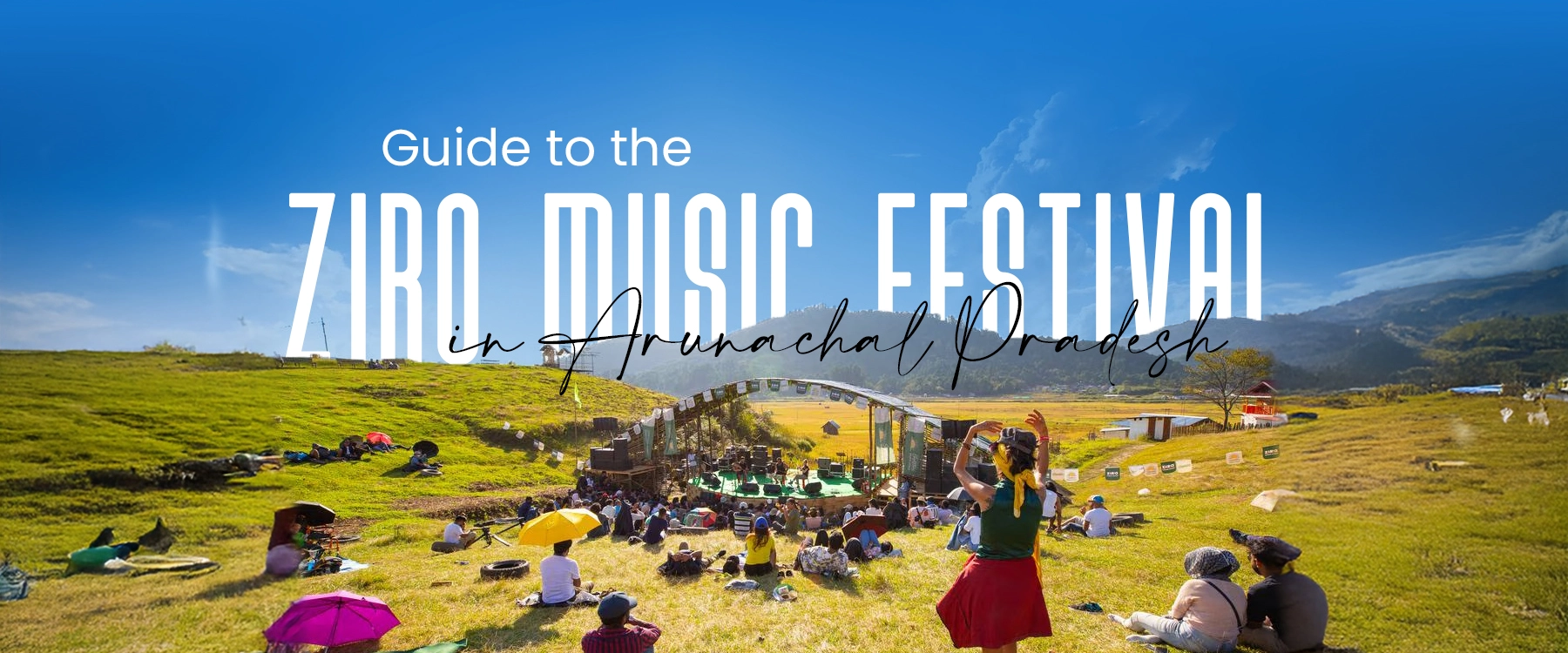
The festival takes place mainly in Hong Village, one of the largest Apatani settlements in the region. Bamboo stages rise directly between open agricultural fields, and visitors often sit on grass or bamboo seating areas while listening to music under changing mountain weather.
The venue itself avoids large permanent structures. Organisers construct stages, stalls, and pathways mainly using bamboo and local wood so the natural environment remains protected.
The festival stages themselves reflect local cultural identity. The two primary stages are called:
In local Apatani tradition, Danyi represents the Sun while Pwlo represents the Moon. Daytime performances usually happen on the Danyi Stage, while evening and late-night acts continue on the Pwlo Stage under cooler temperatures and mountain fog.
This symbolic connection between music, nature, and tribal identity forms one of the festival’s most unique characteristics. Even the overall atmosphere avoids excessive commercial branding so the environment feels more organic and community-driven.
The Apatani tribe forms the soul of the Ziro Festival experience. Without the participation of local villagers and tribal communities, the festival would lose much of its identity.
The Apatanis are widely respected for:
Older Apatani women are especially recognised for their facial tattoos and traditional wooden nose plugs known as Yaping Hullo. Although younger generations no longer follow this practice widely, these traditions remain important symbols of tribal history and identity.
During the festival, travellers often interact directly with local villagers through:
Visitors frequently experience Apatani hospitality through local meals, conversations, and cultural exchanges that feel much more personal than standard tourist interactions.
Food becomes a major part of the festival atmosphere because the event strongly promotes local cuisine instead of only serving standard fast food options.
Travellers often try:
The food courts mainly use bamboo serving plates and eco-friendly materials instead of plastic disposables. Even simple meals feel special because they are eaten inside open mountain landscapes surrounded by live music and tribal culture.
Vegetarian options are available, although Northeast cuisine remains heavily meat-focused compared to many other Indian regions.
Ziro Festival became respected mainly because of its music curation. The organisers consistently focus on artistic diversity instead of relying only on commercial popularity.
Over the years, the festival has hosted:
Artists who have performed include:
The lineup remains intentionally balanced. Even famous performers appear alongside lesser-known musicians with equal visibility because the organisers avoid celebrity hierarchy in festival promotion.
Environmental protection remains one of the strongest foundations of Ziro Festival. Organisers actively try to reduce pollution and preserve the valley’s ecosystem through strict sustainability policies.
The festival follows practices such as:
Attendance generally remains capped at nearly 10,000 visitors per day so the valley does not face excessive environmental pressure. Volunteers regularly clean waste across the grounds, and organisers continuously educate visitors about responsible travel behaviour.
Although challenges still exist due to tourism growth and outside waste generation, the festival continues working towards becoming one of India’s most environmentally responsible music events.
Travelling to Ziro requires planning because Arunachal Pradesh does not have the same level of direct transport connectivity as major tourist states. However, careful planning makes the journey manageable and highly rewarding.
Reaching by Flight
Most travellers first fly to Assam or Itanagar before continuing by road towards Ziro Valley.
Major Nearby Airports
Hollongi Airport (Itanagar)
This airport remains one of the nearest flight connections to Ziro and connects with cities such as Guwahati and Kolkata.
Lilabari Airport (Assam)
Located near North Lakhimpur, this airport also serves as an important access point for travellers entering Arunachal Pradesh.
Guwahati Airport
Many travellers prefer Guwahati because it offers stronger airline connectivity from major Indian cities.
Flightsmojo helps travellers compare flight routes across different airlines and secure affordable fares before festival demand pushes prices higher. Early flight booking becomes especially important during September because Northeast travel demand increases rapidly near festival dates.
Camping forms one of the strongest social experiences at Ziro Festival because many travellers stay directly beside the festival grounds.
Accommodation options include:
Budget travellers usually prefer shared camping because it keeps them close to performances and social activity. Premium travellers often choose luxury tents with bedding, electricity, and additional comfort.
Homestays offer another special experience because visitors stay directly with local Apatani families and experience daily tribal life more closely.
Weather Conditions During the Festival
September weather in Ziro remains cool and refreshing compared to most Indian cities. Daytime temperatures usually stay pleasant, while evenings become colder because of the valley’s altitude.
Mountain fog often appears after sunset, and light rain may still occur due to the late monsoon season. Travellers should always carry:
The changing mountain weather actually adds to the festival atmosphere because music performances continue under drifting fog and cool night air.
Ziro Festival is widely considered one of the safest music festivals in India, especially for solo travellers and women. The atmosphere remains relatively peaceful compared to crowded commercial festivals.
However, travellers should still prepare carefully because:
Power banks, offline maps, cash, and emergency medicines become extremely important during the trip.
Many people initially visit Ziro Festival because of music, but they leave remembering the valley, local people, mountain atmosphere, and emotional experience much more strongly.
Very few festivals in India allow travellers to:
This combination creates a rare atmosphere that feels peaceful, artistic, and deeply connected to nature.
Flightsmojo helps travellers plan this journey more affordably by offering cheap flight booking options to Northeast India along with fare comparison across multiple airlines. Early booking usually helps travellers secure much lower prices before festival-season demand increases sharply.
With smart planning, proper preparation, and early flight booking, Ziro Festival can easily become one of the most memorable travel experiences in India.
1. What makes Ziro Festival different from other music festivals in India?
Ziro Festival stands out because it combines independent music with tribal culture, mountain landscapes, and eco-friendly experiences. Unlike commercial festivals, the atmosphere feels peaceful, community-driven, and deeply connected to nature.
2. When is the best time to attend Ziro Festival of Music?
The festival usually takes place in September, which is considered the best time to experience Ziro Valley. The weather stays cool, the rice fields turn golden, and the valley looks especially beautiful during this season.
3. How can I reach Ziro Festival from major Indian cities?
Most travellers first fly to Guwahati, Hollongi, or Lilabari Airport and then continue by road towards Ziro Valley. Early flight booking helps secure cheaper fares before festival demand increases.
4. Why should travellers book flights early for Ziro Festival?
Flight prices to Northeast India rise quickly during festival season because demand increases sharply. Booking in advance helps travellers secure affordable flight tickets and better airline options.
5. What type of accommodation is available during Ziro Festival?
Travellers can choose between camping tents, glamping setups, local homestays, and guesthouses. Camping near the festival grounds remains the most popular option because it keeps visitors close to performances and social activities.
6. Is Ziro Festival safe for solo travellers and women?
Yes, Ziro Festival is widely considered one of the safest music festivals in India. The crowd remains relatively calm, and the local Apatani community creates a welcoming environment for travellers.
7. What should travellers pack for Ziro Festival?
Visitors should carry warm jackets, waterproof clothing, trekking shoes, power banks, portable lights, and cash. Weather changes quickly in the valley, especially during evenings and light rain conditions.
8. Does mobile network and internet work properly in Ziro Valley?
Network connectivity remains limited in many parts of Ziro Valley, and internet access can be unreliable during the festival. Travellers should download offline maps and keep important information saved in advance.
9. What kind of food can travellers expect at Ziro Festival?
The festival offers local Northeast cuisine including smoked pork dishes, bamboo shoot curry, rice-based meals, and traditional Apong. Vegetarian food is also available, although the region is known mainly for meat-focused cuisine.
10. How does Flightsmojo help travellers plan their Ziro Festival trip?
Flightsmojo helps travellers compare airline fares, track changing ticket prices, and book affordable flights to Northeast India. Early booking through the platform helps reduce travel costs before festival-season prices increase.